
The Metabolic Case for Artisan Coffee: What Fresh Roasting Reveals About Health
The Metabolic Case for Artisan Coffee: What Fresh Roasting Reveals About Health
I've spent years examining how food quality affects metabolic health. Most people think coffee is just about caffeine—a morning ritual to wake up and get moving.
The research tells a different story.
Coffee functions as a metabolic intervention when it's fresh. The bioactive compounds that influence your mitochondrial function, insulin sensitivity, and gut microbiome degrade rapidly after roasting. Within weeks, what could have been a powerful health tool becomes little more than a caffeine delivery system.
This isn't about being a coffee snob. This is about understanding that freshness determines efficacy—the same principle that applies to vegetables, meat, and every other whole food you consume.
The Chlorogenic Acid Timeline Most People Miss
When green coffee beans hit 230°C for 12 minutes during roasting, total chlorogenic acid content drops to nearly 50%. Push that to 250°C for 21 minutes, and chlorogenic acids fall to trace levels.
This matters because chlorogenic acids are the primary polyphenols in coffee—the compounds responsible for most metabolic benefits.
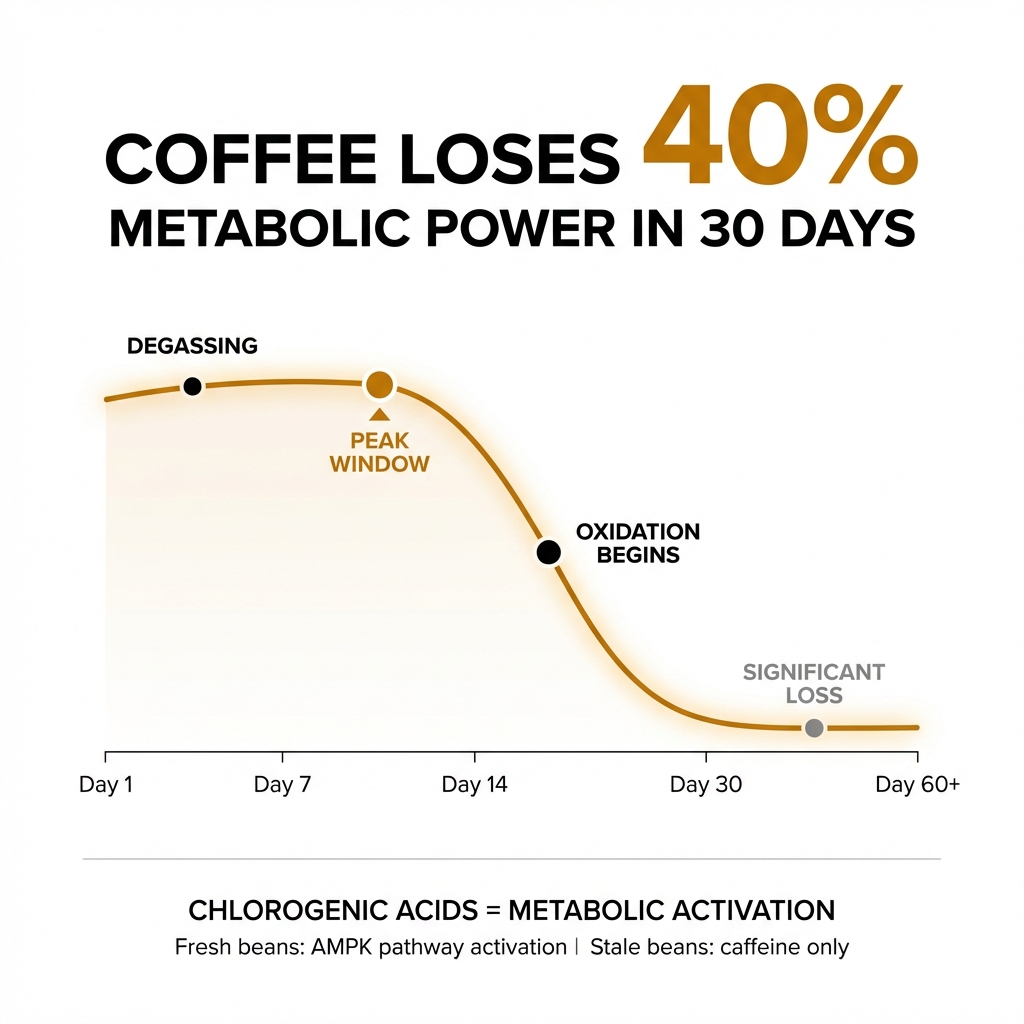
Here's the degradation timeline after roasting:
Days 1-7: The Degassing Phase
CO2 releases aggressively from freshly roasted beans. The coffee isn't ready yet. Brewing during this window produces uneven extraction and masked flavors.
Days 6-14: Peak Freshness Window
This is when coffee delivers maximum polyphenol content and metabolic activation. The degassing has subsided, but oxidation hasn't significantly degraded the bioactive compounds. The coffee tastes sweetest and most balanced.
Days 15-30: Gradual Decline
Oxidation accelerates, especially once you grind the beans. Surface area increases, oxygen exposure multiplies, and chlorogenic acids break down. Darker roasts degrade faster than lighter roasts.
Beyond 30 Days: Significant Loss
The coffee tastes flat and cardboard-like. Polyphenols have degraded substantially. You're drinking something that resembles coffee in flavor but lacks the metabolic compounds that make it valuable.
This oxidation process mirrors what happens to nutrients in processed foods. Vitamins, polyphenols, and antioxidants degrade through the same mechanisms—oxygen exposure, heat, and time.
Roast Level and Metabolic Impact
Lighter roasts preserve significantly more chlorogenic acids than darker roasts. Medium roast coffees retain higher concentrations of both chlorogenic acid and caffeine compared to dark roasts.
The question becomes: does this translate to measurable metabolic differences?
Chlorogenic acid lowers the glycemic impact of foods and improves glucose metabolism. This directly influences insulin sensitivity. Lighter roasts, with their higher chlorogenic acid content, offer greater potential for metabolic benefits.
But here's the nuance—enjoyment matters.
If you prefer darker roasts and drink more coffee because you actually like it, you might consume similar total amounts of beneficial compounds. The key is drinking enough of what you enjoy versus forcing yourself to drink something you don't.
Personal preference and consumption patterns influence real-world outcomes as much as the raw chlorogenic acid content.
Individual Metabolic Response Variability
Not everyone responds to coffee the same way.
Your genetic makeup, gut microbiome composition, sex, and hormonal status determine how effectively you absorb and utilize chlorogenic acids. Some people derive substantial metabolic benefits. Others get essentially nothing, regardless of coffee quality.
Genetic factors influence polyphenol metabolism similarly to how the CYP1A2 gene affects caffeine metabolism. Variations in enzymes that process polyphenols alter how long these compounds remain active in your body.
Gut microbiome composition plays a crucial role in breaking down chlorogenic acids into bioactive metabolites. Coffee shows the highest correlation with microbiome components among over 150 food items studied. The species Lawsonibacter asaccharolyticus appears 6-8 times more abundant in coffee drinkers compared to non-drinkers.
This microbe ferments coffee fibers and polyphenols, producing quinic acid and other beneficial metabolites that influence blood sugar regulation, inflammation, and blood pressure.
Sex and hormonal factors affect metabolism rates. Females, particularly those on contraceptive pills, metabolize caffeine more slowly. This likely influences how other coffee compounds behave in the body as well.
For some people, caffeine's negative effects on sleep and circadian rhythms outweigh any metabolic benefits. The disruption to sleep quality eliminates the positive effects entirely.
This variability means personalized approaches matter. What works for one person may not work for another.
Fresh Coffee and Gut Microbiome Dynamics
Freshly roasted coffee contains intact polyphenols, soluble fibers, and melanoidins that function as prebiotics. These compounds feed beneficial gut bacteria and support microbiome diversity.
As coffee ages, polyphenols degrade through oxidation. The chemical structure changes. This degradation alters the substrate available to gut microbes.
While direct comparative studies between fresh and stale coffee on microbiome diversity remain limited, the chemical changes suggest meaningful impacts. Fresh coffee's intact polyphenols preferentially support L. asaccharolyticus and other beneficial species. Degraded compounds likely feed different bacterial populations or produce fewer beneficial metabolites.
The fermentation of fresh coffee polyphenols produces quinic acid, which influences metabolic markers. Degraded polyphenols may not generate the same metabolic byproducts.
The degradation follows a gradual slope rather than an abrupt threshold. Around 30 days post-roast, oxidation becomes pronounced enough that the chemical substrates for microbial fermentation have changed considerably. Beyond 60 days, degradation continues, further reducing beneficial compound availability.
For optimal gut microbiome benefits, consume coffee within 2-4 weeks post-roast. This window balances polyphenol availability with practical storage considerations.
Mitochondrial Function and ATP Production
Chlorogenic acids activate cellular antioxidant pathways, particularly the NRF2 switch. This protects mitochondria from oxidative damage and supports efficient ATP production.
These compounds also stimulate mitochondrial biogenesis through AMPK activation. AMPK functions as a metabolic switch that increases fat burning, improves insulin sensitivity, and triggers the creation of new mitochondria.
Research demonstrates that chlorogenic acid increases ATP synthesis and modulates energy metabolism by upregulating AMPK and PGC-1α expression. Coffee bioactive compounds decreased lipid accumulation by 23-41% and triggered carnitine palmitoyltransferase-1 activity by 1.3 to 1.7-fold through AMPK pathway activation.
As chlorogenic acids degrade through oxidation, their antioxidant potency diminishes. This reduction leads to less effective protection against mitochondrial oxidative damage, potentially impairing ATP production efficiency.
Degraded polyphenols show diminished ability to activate AMPK and NRF2 pathways. This results in less mitochondrial biogenesis and lower energy production capacity.
The magnitude of difference matters.
Comparing freshly roasted coffee to month-old coffee, the degradation of polyphenols suggests a 20-40% reduction in AMPK and NRF2 activation. This isn't a trivial difference.
A 20-40% reduction in metabolic pathway activation translates to noticeable decreases in energy levels, fat oxidation, and metabolic rate. You might experience reduced muscle endurance, slower recovery, and lower basal metabolic efficiency.
Fresh coffee combined with protein intake and physical activity amplifies these pathways further. The synergistic effects enhance energy and metabolism beyond what stale coffee can support.
Optimal Timing Protocols
Timing determines how effectively you leverage coffee's metabolic benefits.
Relative to exercise: Consume freshly roasted coffee 30 minutes before physical activity. This allows caffeine and polyphenols to prime your metabolism, enhancing fat burning and energy production during exercise.
Hydration: Drink water before and after coffee. Adequate hydration improves caffeine's metabolic activation and reduces adrenal stress.
Movement amplification: Even light movement after coffee consumption boosts mitochondrial activity synergistically, increasing energy output and metabolic rate.
Protein co-ingestion: Combine coffee with protein sources rich in leucine—collagen plus leucine powder works well. This supports muscle protein synthesis while AMPK activation promotes fat burning. The combination becomes particularly important for older adults or anyone focused on maintaining lean mass.
Blood sugar considerations: If you're sensitive to blood sugar fluctuations, eat before drinking coffee. Coffee consumed on an empty stomach can impair glucose response, especially after poor sleep.
Eating window alignment: Time-restricted feeding with a 6-8 hour eating window supports insulin suppression and AMPK activation. Consuming coffee within or just before this window enhances metabolic flexibility.
Cortisol timing: Wait 30 minutes after waking before drinking coffee. This avoids overlapping with your natural cortisol peak.
Cost-Benefit Analysis: Fresh Artisan vs. Supermarket Coffee
Fresh artisan coffee costs more. Typically $15-30+ per pound versus under $10 for pre-ground supermarket coffee.
The question becomes whether the metabolic return justifies the cost difference.
Artisan coffee preserves more chlorogenic acids and polyphenols through careful sourcing and fresher roasting. These compounds activate AMPK and NRF2 pathways, supporting mitochondrial function, insulin sensitivity, and reduced inflammation.
Pre-ground supermarket coffee contains older, blended beans with lower antioxidant content and higher degradation of beneficial compounds. The polyphenol content difference translates to 20-40% greater activation of key metabolic pathways with fresh coffee.
This produces noticeable improvements in energy, fat oxidation, and metabolic rate.
The investment compares to buying organic produce. Both choices prioritize quality and nutrient density. Both reduce exposure to harmful compounds while increasing intake of beneficial bioactives.
For people focused on metabolic health, longevity, and cognitive function, the premium for fresh artisan coffee represents a worthwhile investment. The measurable benefits in mitochondrial function, insulin sensitivity, and gut microbiome support justify the cost.
Cost efficiency strategies:
Buy whole beans and grind fresh at home. This maximizes freshness and health benefits while controlling costs. Many specialty roasters offer subscription services that reduce per-pound prices.
Where the Metabolic Benefit Actually Lives
If you can only upgrade one aspect of your coffee routine, prioritize freshly roasted whole beans over precision brewing equipment.
The metabolic benefits stem primarily from bioactive compounds—chlorogenic acids and polyphenols—which degrade significantly over time and with improper storage. Freshly roasted beans retain higher levels of these compounds, directly influencing AMPK and NRF2 pathway activation.
Precision grinding and brewing optimize flavor extraction and can enhance antioxidant availability. But these benefits remain secondary to the quality and freshness of the raw material.
Even basic brewing methods—pour-over, drip—effectively extract beneficial compounds if the beans are fresh. The difference in antioxidant extraction between basic and precision brewing is relatively small compared to the loss from using stale or pre-ground coffee.
Invest in freshly roasted whole beans and grind them with a basic burr grinder. This approach preserves polyphenols and maximizes health effects without requiring expensive brewing equipment.
Once you've secured fresh beans, upgrading to precision brewing equipment enhances flavor and extraction. But it delivers smaller incremental impacts on metabolic health compared to bean freshness.
Storage Methods That Preserve Polyphenols
Proper storage determines how long your fresh beans maintain their metabolic benefits.
Use airtight, opaque containers. Ceramic, stainless steel, or opaque glass canisters prevent oxygen, moisture, heat, and light exposure—the four primary enemies of coffee freshness.
Store in a cool, dark place. Keep beans away from heat sources and direct sunlight. Temperature fluctuations accelerate oxidation and polyphenol degradation. A pantry or cupboard works well.
Avoid refrigeration. Refrigerators introduce moisture and odors that coffee beans readily absorb. Condensation during temperature changes accelerates degradation.
Freezing requires caution. You can preserve coffee for months if you use airtight, moisture-proof containers and divide coffee into small portions to avoid repeated thawing. Thaw frozen beans at room temperature before opening to prevent condensation. Improper freezing—frequent in/out cycles—introduces moisture and accelerates degradation.
Grind just before brewing. Ground coffee loses freshness and polyphenols much faster than whole beans due to increased surface area exposure to oxygen.
Improper storage compresses the degradation timeline dramatically. While fresh coffee maintains peak polyphenol levels for 2-4 weeks when stored properly, improper storage reduces this window to days. Leaving beans in the original non-airtight bag or in clear containers exposed to light causes significant degradation within a week.
Coffee's Place in the Metabolic Health Framework
Core metabolic health depends primarily on sleep quality, nutrient-dense whole foods, stress management, physical activity, and gut health. These elements establish the baseline for metabolic flexibility, insulin sensitivity, and mitochondrial function.
Without these foundations, other interventions show limited effectiveness.
Fresh coffee functions as an optimization tool rather than a foundational pillar. It amplifies mitochondrial efficiency, activates AMPK and NRF2 pathways, supports gut microbiome diversity, and improves insulin sensitivity. These effects optimize and complement foundational lifestyle factors.
The impact ranks as moderate to high when integrated properly into a holistic metabolic health strategy. Coffee supports longevity, cognitive function, and metabolic resilience. This makes it a valuable adjunct to core health strategies.
The metabolic benefits amplify when combined with good sleep, balanced nutrition, regular exercise, and stress management. Coffee's AMPK activation complements physical activity and fasting effects, enhancing fat oxidation and mitochondrial biogenesis.
Coffee shouldn't be viewed as a standalone solution. It functions as a strategic metabolic tool that enhances the effectiveness of foundational health behaviors. Prioritizing sleep, nutrition, and movement remains paramount.
For many people, coffee represents an enjoyable and accessible way to support metabolic health daily. This makes it a practical and sustainable optimization strategy.
The Paradigm Shift
Most people view coffee as a stimulant or casual beverage. They consume stale, pre-ground supermarket coffee without regard for freshness or quality.
The research reveals something different.
Coffee functions as a metabolic intervention whose efficacy depends on freshness, storage, and timing—not just caffeine content. The true health benefits come from bioactive compounds like chlorogenic acids that degrade rapidly after roasting and with poor storage.
These compounds feed specific gut microbes like Lawsonibacter asaccharolyticus. They produce beneficial metabolites including quinic acid and short-chain fatty acids. They activate cellular pathways—AMPK and NRF2—that support mitochondrial function, insulin sensitivity, and inflammation reduction.
Drinking freshly roasted, well-stored coffee within weeks of roasting maximizes polyphenol intake and metabolic activation. This transforms coffee from a simple pick-me-up into a science-backed health tool.
The shift requires viewing coffee as a complex, bioactive food that interacts with your microbiome and cellular metabolism. Not just a caffeine delivery system.
Prioritize freshness and proper storage to access coffee's full metabolic potential. Recognize it as precision metabolic medicine that, when used strategically, enhances health and longevity.
This reframes coffee from a casual habit into a deliberate component of metabolic health protocols—aligned with the same whole foods philosophy that guides every other nutritional choice you make.